Torchlight InfiniteGuide
Torchlight Infinite talents and skill tree explained
Six gods, up to three panels, core talents and the Divinity Slate grid. How the talent system fits together and where beginners go wrong.
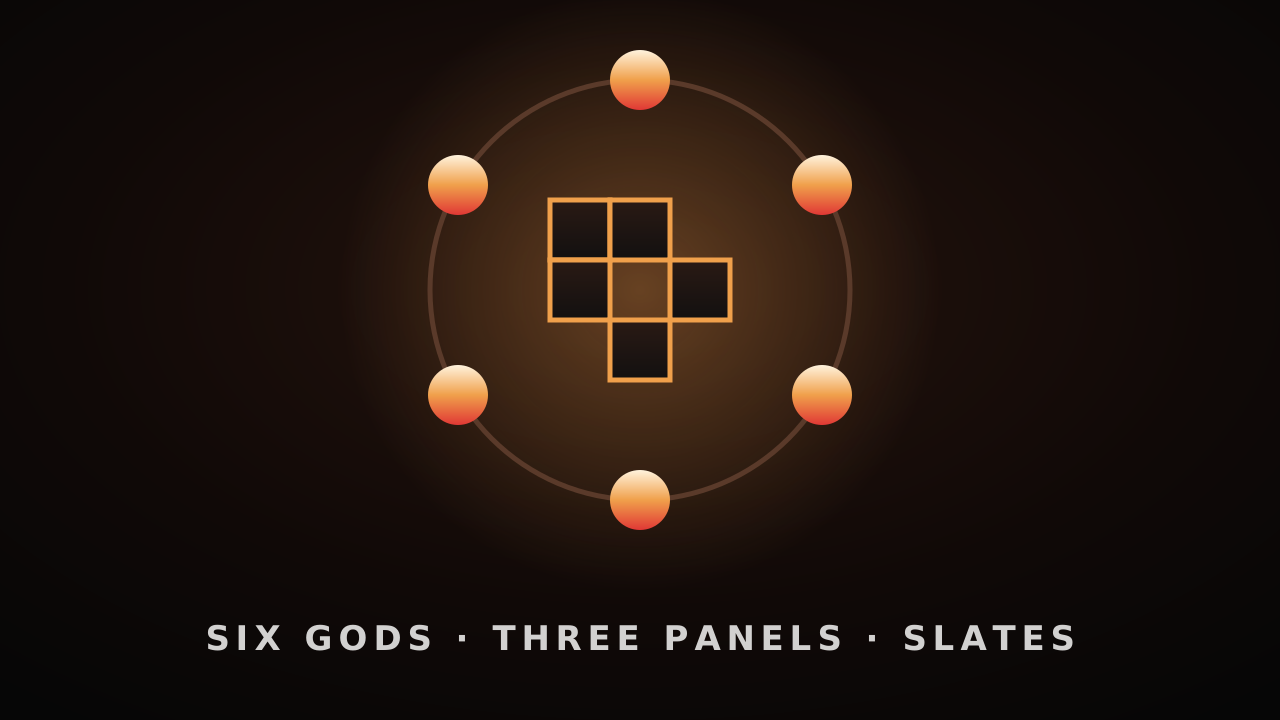
Torchlight Infinite's skill tree is its talent system. Talents come from six gods, you fill up to three of their panels, and core talents on each panel change how your build plays. On top of that sits the Divinity Slate grid, a puzzle of talent pieces you unlock as you level. Here is how it fits together.
The short version
- There are six god trees: Might, Hunting, Knowledge, War, Deception and Machines.
- A character fills up to three talent panels. The game marks a recommended god for your first one.
- Core talents are choices between a few options, and they matter more than the small nodes. Copy them exactly from a build guide.
- Divinity Slates fill a separate grid that grows as you level, with the full space open at level 95.
The six gods
The Torchlight Infinite database lists six god trees: God of Might, Goddess of Hunting, Goddess of Knowledge, God of War, Goddess of Deception and God of Machines. Each one leans towards a style of play, and the panels show their focus in the game, so read the core talents before you commit points.
Older guides call the Goddess of Deception the Goddess of Darkness. Newer seasons also added the New God and Nether King, which tie into the Divinity Slate system below.
Panels and points
Each god has several talent panels, and your character fills up to three. The first panel has a recommended god for your hero, marked in the game, and the leveling guide suggests putting early points into God of War. Later panels open as you level, and older guides note the third can come from any of the six gods.
The small nodes give flat bonuses such as damage, life or speed. The important ones are the core talents, where you pick one of several options. A single core talent can change a build more than any item, which is why build guides list them precisely.
Divinity Slates
Divinity Slates are a separate layer, placed on the Statue of the New God. Each slate is a piece in a grid, a bit like a Tetris piece, and carries fixed talents themed on one of the six gods. You fit slates together to use the space well, and you can add more talents to a slate through Branding, up to a cap. Early on only the centre of the grid is open, and the full space unlocks at level 95.
Legendary slates add the build-defining effects. The database lists 163 of them, from executing low life enemies to fixing a stat at a set value. Most players can ignore slates while leveling and start caring once they reach the Netherrealm.
Resetting talents
Early on you can reset talents for free. After the free window, each reset point costs Water of Forgetting, which drops and can be bought on the Auction House. Our currency guide covers it. Plan a respec before a big build change so you buy enough at once.
Common talent mistakes
- Spreading points across damage types. Pick one or two and stack them.
- Ignoring the recommended god for your first panel without a reason.
- Copying the panels from a guide but not its core talent choices.
- Following a talent guide from an older season. Panels and core talents change with balance patches.
For how talents fit with your trait, skills and gear, see the builds guide, and for the hero side, the classes guide.
Common questions
How many talent trees are there in Torchlight Infinite?
Six god trees: Might, Hunting, Knowledge, War, Deception and Machines. Each has several panels.
How many talent panels can I use?
Up to three.
Can I reset talents?
Yes, free at first and with Water of Forgetting after that.
When do Divinity Slates unlock fully?
The grid grows as you level, and the full space is open at level 95.